 DESCUENTO DE TERROR — RESET 21 DE $444 A $333 SOLO HASTA EL 2 DE NOVIEMBRE. ¡ATRÉVETE A RESPIRAR!
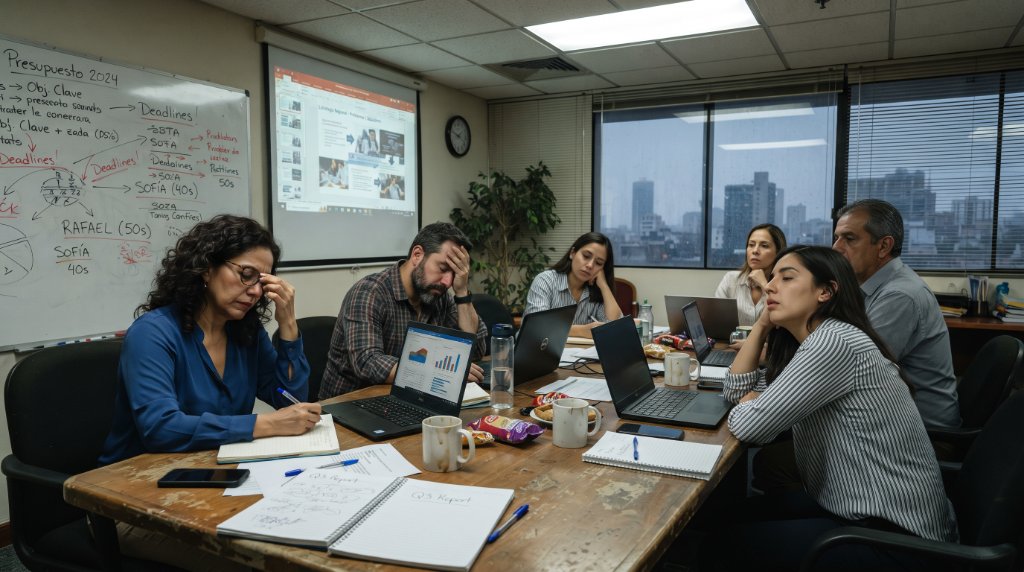
The meeting that leaves you exhausted for no clear reason
An hour sitting down. No physical activity. And you leave with the same exhaustion you'd feel after real physical effort. If this happens to you often, it's accumulated nervous system dysregulation during the meeting, not physical tiredness.
Most teams analyze their meetings by content: was the agenda covered? were decisions made? Almost nobody evaluates the collective physiological state people walk in and out with, and that state is what determines whether the next meeting will be productive or just more wear and tear.
State spreads before words do
Before anyone speaks, the group is already synchronized through tone of voice, posture, and the speed at which each person enters the room or the call. It's a well-documented physiological contagion phenomenon: humans regulate their internal state based on the people around them, especially whoever holds the most authority in the room.
That means the state a leader walks into a meeting with is a variable that determines the collective outcome, before the first word is said, not a personal detail.
The 3 patterns that drain a team in a meeting
Meetings that open in defensive mode
When a meeting opens with pressure, urgency, or an accusatory tone, the group enters sympathetic mode from minute one. From there, the capacity for clear thinking is already reduced, and stays that way for the rest of the session.
Meetings without a clear close
When a meeting ends without resolution or defined next steps, each participant's mind keeps "processing" the topic in the background for the rest of the day. It's invisible cognitive load that builds up meeting after meeting.
Meetings where the leader arrives dysregulated
A leader who arrives rushed, tense, or distracted transmits that state to the group within the first 90 seconds, without saying a single word about the meeting's topic.
How a leader shifts the room's state in the first minute
Before walking in
Two minutes before, check what state you're about to lead from. It's an operational question, not a philosophical one, and it determines the outcome of the next hour.
When opening the meeting
Start with a sentence of context, not the urgency of the first agenda item. Giving 15 seconds of orientation before diving into the topic lowers the group's defensive activation.
When closing the meeting
Always end with explicit next steps, even minimal ones. A clear close gives the team's nervous system permission to let go of the topic.
FAQ
Does this apply to virtual meetings too?
Yes, and even more so: on video, nonverbal cues come through reduced, so the leader's tone of voice and pace carry more weight than usual.
What if I'm not the one leading the meeting?
You can regulate your own state before walking in and it already affects the group, even without a formal leadership role. Physiological influence doesn't depend on the org chart.